 0 items in your cart
Centenary of Conlon Nancarrow's Birth
Sep. 24, 2012
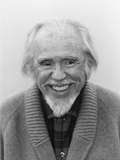
On October 27, we celebrate the 100th anniversary of the birth of one of the most revolutionary voices of 20th-century American music, Conlon Nancarrow. A musical pioneer of the highest order, Nancarrow is widely remembered for his series of astonishing compositions for player piano that expanded ad infinitum the preconceptions of what was possible within a piece of music, particularly concerning the parameters of rhythm and tempi.
Though living the majority of his life out of the public eye with his family in Mexico, Nancarrow led a rich and adventurous life. Born in Texarkana, Arkansas in 1912, Nancarrow studied music at the Cincinnati College Conservatory of Music (1929-32) and in Boston under Walter Piston, Nicolas Slonimsky and, foremost, Roger Sessions (1933-36). While in Boston, Nancarrow opted to join the Communist forces in the Spanish Civil War, enlisting in the Abraham Lincoln Brigade in 1937 to fight against Francisco Franco. After an internment by the French at the Gurs camp in 1939, the composer returned to the US. Upon being denied a passport by the US government, no doubt in connection to his overt ties to socialism, he immigrated to Mexico in 1940, becoming a Mexican citizen in 1956.
It was in Mexico that Nancarrow embarked on what would become his life’s legacy of composing music for the player piano. Though he had already composed pieces in the US earlier in life, the technical demands his music required of players resulted in many unsatisfactory performances. This did not change upon his move to Mexico, and it became abundantly clear the composer required a different medium entirely to express his true musical vision. Inspired by Henry Cowell’s book New Music Resources which he encountered in 1939, Nancarrow soon found his answer in the form of the player piano. As there is a scale of pitch frequencies, there is a scale of tempi, and Nancarrow explored this concept by creating a stirring series of pieces that superimposed tempi and rhythm within a single piece. His early works for player piano played off of jazz motifs and harmonies with extremely complex metric schemes. He would go on to explore in depth the idea of musical canon, with different voices all playing individual sliding tempi often based on complex tempo ratios, for example e:pi as is used in Study No. 40.
The release of Columbia Records’ recordings of select player piano studies in 1969 followed by the player piano recordings produced by Charles Amirkhanian on the 1750 Arch label in the late 70’s finally exposed Nancarrow’s music to a much wider audience, at age 65. He was awarded a MacArthur Fellowship in 1982, and his increased popularity then led the composer to compose several works for small ensembles.
Nancarrow’s music made a profound effect on another 20th-century master, György Ligeti, who exclaimed upon hearing his music, “[Nancarrow’s music is] the greatest discovery since Webern and Ives... something great and important for all music history! His music is so utterly original, enjoyable, perfectly constructed, but at the same time emotional...for me it's the best music of any composer living today.”
Schott Music publishes versions of over 14 of the player piano studies in chamber orchestra and ensemble arrangements. Wergo released recordings of the complete Studies for Player Piano, produced by Charles Amirkhanian, in 2000, and an album of piano, chamber and orchestral performances of his music, Nancarrow: As Fast as Possible, in 2011. Purchase the recordings here: www.amazon.com.
Visit www.schott-music.com for more on the life and work of Conlon Nancarrow.
The new documentary Conlon Nancarrow: Virtuoso of the Player Piano, directed by James Greeson, is available now. Purchase this at www.amazon.com and watch the trailer here.
Purchase Kyle Gann’s exploration of Nancarrow’s complete output, The Music of Conlon Nancarrow (Cambridge University Press, 1995), here.
News

On December 7, the American Symphony Orchestra performed two works by 20th-century Polish composer Grazyna Bacewicz: Music for …
Zen-On presents five new chamber works for soloists or duos as part of their 24th annual contemporary music concert “Groupe …

On December 19, Pyotr Belyakin will lead the Novosibirsk Philharmonic Orchestra in the Russian premiere of Victoria Borisova-Ollas’s …
