 0 items in your cart
BBC Concert Orchestra Presents All-Weill Program
Apr. 01, 2013
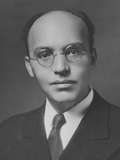
“The Rest is Noise” festival continues in London with an all-Weill program presented by the BBC Concert Orchestra on April 12, conducted by Keith Lockhart. Inspired by Alex Ross’s indispensible writing in The Rest is Noise: Listening to the Twentieth Century, London’s Southbank Centre has dedicated 2013 to a journey through the most important musical works of the last century, exploring them in relation to the social and political upheavals that shaped them. Not surprisingly, Kurt Weill is featured on several programs—a London Philharmonic concert of The Threepenny Opera (March 2) a BBC Concert Orchestra performance of The Seven Deadly Sins (March 3), and the all-Weill program on April 12.
The program, entitled “Kurt Weill Berlin to Broadway,” provides a broad overview of Weill’s career, from the cantata Der neue Orpheus (1927), to Symphony No. 2 (1934), to songs from his Broadway musicals (1936-1949). The one-hour revue of Weill’s Broadway songs will be performed by 2012 Lotte Lenya Competition Prize winner Justin Hopkins (bass), Susanna Hurrell (soprano), Kathryn Martin (mezzo-soprano), and Paul Curievici (tenor). Der neue Orpheus, which Lockhart describes as “totally unique,” will feature soprano Ilona Dominich and Charles Mutter on violin.“We’re very excited about performing it,” Lockhart adds, “It’s the hidden gem of the program.” Lockhart, who is Principal Conductor of the BBC Concert Orchestra and Conductor of the Boston Pops, says of planning the program:
One of the stories [Alex Ross] talks about is the diaspora of European composers to America and the subsequent enriching of America’s cultural life. I thought the best way to tell that story was to take Kurt Weill, who, in so many ways, is so emblematic of those transformations—a man who was very much in the thick of things in German composition at the beginning of the 20th century, leaving Germany as a rather young man and transforming himself into a Broadway composer... I thought it would be great to perform two pieces that illustrate where Weill was, and then a selection of songs that show where Weill ended up.
Visit www.kwf.org for more information on the life and work of Kurt Weill.
Kurt Weill
The Threepenny Opera (1928)
play with music after John Gay's The Beggar's Opera; in three acts.
German translation by Elisabeth Hauptmann.
Adaptation and lyrics by Bertolt Brecht
2 sopranos, 2 mezzo-sopranos, tenor, baritone, bass-baritone and speaking roles
alto sax (fl, cl, bar. sax).ten. sax (sop. sax, bn, bass cl)-tpt.tbn (double bass)-banjo (cello, guitar, Hawaiian guitar, mandolin, bandoneon) timp/perc (tpt 2)-harmonium (celesta, piano)
full evening
The Seven Deadly Sins (1933)
ballet chanté in nine scenes
lyrics by Bertolt Brecht
for soprano, 2 tenors, baritone, bass, dancer and corps de ballet
2(2pic).1.2.1-2.2.1.1-timp.perc-hp.pno.bnj(gtr)-str
35'
Symphony No. 2 (1933-1934)
for orchestra
2(2 pic).2.2.2-2.2.2.0-timp.3perc-str
25’
News

On February 27, the English National Opera presents the world premiere production of Ryan Wigglesworth’s The Winter’s Tale …

The Juilliard Percussion Ensemble, led by Daniel Druckman, presents “Bell and Drum: Percussion Music From China” on December 11 …

The intrepid American conductor Jeffrey Milarsky led Juilliard’s AXIOM in a performance of music by Luciano Berio on December 1 …