 0 items in your cart
A Tribute to Dietrich Fischer-Dieskau (1925-2012)
Jun. 05, 2012
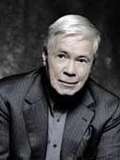
We were saddened by the recent news of Dietrich Fischer-Dieskau's passing, a protean figure in the world of vocal music, and in particular German lieder and opera. Dietrich Fischer-Dieskau was 86 years old and died at his home in Bavaria.
Fischer-Dieskau was born in Berlin in 1925 and studied there with the veteran lieder artist Georg Walter and with Hermann Weissenborn. He made his mark early in Berlin in a wide range of operatic repertoire performing most of the major Italian and German baritone roles. He appeared regularly at the Vienna State Opera, the Bavarian State Opera, Covent Garden, and Salzburg. At Bayreuth he sang Herald (Lohengrin), Wolfram (Tannhäuser), Kothner (Die Meistersinger) and Amfortas (Parsifal), all in the mid-1950s. His insatiable curiosity for the art of the song however is perhaps how he will be best remembered. He recorded all the songs of Schubert, Schumann, Brahms, Hugo Wolf and Strauss suitable for a male voice (often multiple times), and was partnered in concert and on recordings by a host of distinguished pianists, most notably Gerald Moore.
Fischer-Dieskau created, magnificently, the role of Mittenhofer in Hans Werner Henze's Elegy for Young Lovers at the Schwetzingen Festival and the title role in Aribert Reimann's Lear at Munich, which was greeted with universal critical and popular acclaim and hailed as an overwhelming achievement. His portrayals of Hindemith's Mathis, Mandryka in Strauss's Arabella, Wolfram in Wagner's Tannhäuser and Verdi's Falstaff were equally unforgettable experiences in the opera house. One of his first and most memorable portrayals on disc was as Kurwenal in Wilhelm Furtwängler's legendary 1952 recording of Tristan und Isolde. His repertory also extended to the many of the great choral works, from Bach to Britten, as well as song cycles, Mahler's Lieder eines Fahrenden Gesellen and Das Lied von der Erde chief among them.
Not least, Fischer-Dieskau was a great teacher and mentor to scores of singers and musicians the world over, young and old alike. His contributions to music during his lifetime were extraordinary and for those of us who had the good fortune to hear him and see him command a stage, his great aura will not soon, if ever, be diminished.
News

On December 19, Pyotr Belyakin will lead the Novosibirsk Philharmonic Orchestra in the Russian premiere of Victoria Borisova-Ollas’s …

Herr Thaddäuss, a new work by Paweł Mykietyn for bass solo, electronics and symphony orchestra, receives its world premiere …

The Orchestra Haydn di Bolzano e Trento and the Wiener Kammerchor, led by conductor Walter Kobéra performed the Italian …