 0 items in your cart
Remembering Sir Richard Rodney Bennett, CBE, 1936-2012
Dec. 25, 2012
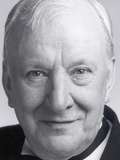
It is with deep sadness that we note the passing of Sir Richard Rodney Bennett, CBE, on December 24 in New York City, aged 76, following a short illness. In addition to a rich catalog of works for the operatic stage and concert hall, Sir Richard composed multiple film scores, among them the hugely popular Four Weddings and a Funeral and three which earned him Oscar nominations: Far from the Madding Crowd, Nicholas and Alexandra, and Murder on the Orient Express. He was also a versatile pianist, regularly performing in the leading jazz clubs of New York and London and with singers including Cleo Laine, Eartha Kit, Marian Montgomery and Claire Martin among others. Above all else, he was a composer with an overwhelming desire to communicate.
Bennett was born in 1936 at Broadstairs in Kent. Coming from a musical family – his mother studied with Gustav Holst – he started composing when he was young and won a scholarship to the Royal Academy of Music in 1953, where he studied with Lennox Berkeley and Howard Ferguson. However, he was later dismissive of his education at the academy, describing it as a “disaster”. “I learnt much more in the Westminster Music Library in Buckingham Palace Road, which was an absolute treasure house of 20th-century music,” he said. “London was very exciting,” he added. “It was cheap and we could live our own lives and be slightly bohemian without being raffish.” Earlier informal training from Elizabeth Lutyens had instilled in him a curiosity for the avant-garde, and thanks to a scholarship from the French Government, he went to study with Boulez for two years from 1957-1959, with frequent visits to Darmstadt.
Having assimilated Boulez’s musical language (he was the percussionist in several early performances of Le Marteau sans Maitre), Bennett then developed what has been termed a ‘neo-Romantic serialism’, which, perhaps like that of Berg, was ideally suited to opera. Indeed, Bennett composed no fewer than three full-length operas in the 1960s: The Mines of Sulphur (now deservedly back in the repertoire after a stunning recent revival at Glimmerglass); A Penny for a Song and Victory. There is also the hugely popular, much performed children’s opera All the King’s Men.
In the ’60s and ’70s Bennett also composed works in a wide range of other genres: there are the large-scale works for choir and orchestra Epithalamion and Spells, as well as three symphonies and concertos and/or concertante pieces for almost every instrument. There are also many a cappella choral works, song-cycles and instrumental solos. Many of his smaller works of the 1970s fall into series, including the sequence of pieces called Scena for solo instruments, and the group of ensemble works called Commedia.
Since his student days Bennett always composed for film. He once said his film and television work was “to earn money to subsidize my other work”, although he added: “I liked writing music that would be played next week by talented musicians. It was the best training there was.” More recently he had composed concert works in a jazz idiom, with ‘crossover’ elements, and with an unashamedly tonal language. But serialism still influenced the way he composed, even providing the foundation for his spectacular score for the BBC’s Gormenghast (1999). In recent years, he regularly performed cabaret at the Algonquin Hotel in New York, often with Claire Martin. He was knighted for Services to Music in 1998.
Sir Richard Rodney Bennett lived in New York City.
Obituaries appear in the Guardian, the Telegraph, the Independent and The New York Times.
News

New York City Opera’s composer-in-residence Tobias Picker earned high praise for the company’s recent production of his powerful fifth opera …

Herr Thaddäuss, a new work by Paweł Mykietyn for bass solo, electronics and symphony orchestra, receives its world premiere …

Following acclaimed world premiere performances of Julian Anderson’s Incantesimi with the Berlin Philharmonic, the Boston Symphony Orchestra, and at the …