 0 items in your cart
2016 Kurt Weill Festival
Feb. 03, 2016
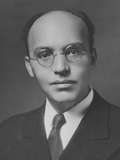
The Kurt Weill Festival in Dessau, Germany, Weill’s birthplace, kicks off February 26. This year’s festival “Krenek, Weill, and Die Moderne” includes more than 60 events featuring a wide array of Weill’s German works alongside the music of his contemporary Ernst Krenek and other modernists who emerged from Germany’s Weimar era. Program highlights include Symphony No. 1 on opening night, a new production of Zaubernacht February 27 through March 13, and Der Zar lässt sich photographieren on February 28.
The festival continues into March with performances by the Ensemble Modern, conducted by Weill expert H.K. Gruber, performing Die Dreigroschenoper in concert on March 4 and Kleine Dreigroschenmusik and Mahagonny Songspiel on March 5. Now in its 24th year, the annual Kurt Weill Fest continues to offer new insight into Weill’s place in the canon.
Other notable performances taking place this month include violinist and conductor John Storgårds performing the Violin Concerto with the Sibelius Academy Symphony Orchestra in Helsinki on February 6, and the Alabama Symphony and Sursum Corda performing Die sieben Todsünden on February 26.
For more information on Kurt Weill, visit kwf.org and visit kurt-weill.de for more information on the Kurt Weill Fest.
Kurt Weill
Symphony No. 1 “Berliner Sinfonie” (1921)
2(pic).1.2.2-2.1.1.0-timp.perc-str
25’
Zaubernacht (1922)
Kurt Weill Edition (Series I, Volume 0)
edited by Elmar Juchem and Andrew Kuster
children's pantomime for solo soprano and chamber orchestra
fl(pic).bsn.perc.pno.str qnt(vn.1-2,vla.,vc.,db.)
60'
Der Zar lässt sich photographieren (1927)
opera buffa in one act
for 2S, 2A, 3T, Bar, B and male chorus
2.2.2.2; 3.2.2.0; piano, timp, perc; strings; on-stage gramophone (for recording of "Tango Angèle")
60’
Die Dreigroschenoper (The Threepenny Opera) (1928)
play with music after John Gay's "The Beggar's Opera"; in three acts
German translation by Elisabeth Hauptmann
adaptation and lyrics by Bertolt Brecht
2S, 2Mz, T, Bar, B-Bar and speaking roles
asax(fl, cl, bsax).tsax(ssax, bsn, bcl)-tpt.tbn(db)-banjo(vc, gtr, Hawaiian gtr, mandolin, bandoneon)-timp/perc (tpt 2)-harm (cel, pno)
full evening
Kleine Dreigroschenmusik (Little Threepenny Music) (1929)
suite from Die Dreigroschenoper for wind orchestra
2(pic).2.asax.tsax.sax(ssax).2-2.0.1.1-timp.perc-bnj.gtr(or harp).acc.pno
22’
Mahagonny Songspiel (1927)
Text (Ger) by Bertolt Brecht
English translation by Michael Feingold
2S, 2T, 2B; orchestra
2cl(bcl).asax-2tpt.tbn-timp.perc-pno-2vn
30’
Concerto for Violin and Wind Orchestra, Op. 12 (1924)
2(pic).1.2.2-2.1.0.0-timp.perc-4 double basses
33’
Die sieben Todsünden
ballet chanté in nine scenes
lyrics (Ger) by Bertolt Brecht
for soprano, 2 tenors, baritone, bass, dancer and corps de ballet
2(2pic).1.2.1-2.2.1.1-timp.perc-hp.pno.bnj(gtr)-str
35'
News

One of Joseph Schwantner’s most beloved compositions, Sparrows, came to Chicago on December 4 in a performance led by Daniel …

The intrepid American conductor Jeffrey Milarsky led Juilliard’s AXIOM in a performance of music by Luciano Berio on December 1 …

The Saint Louis Symphony Orchestra led by David Robertson performs Sir Michael Tippett’s beloved oratorio A Child of Our Time …